Most foreign visitors to the Czech Republic never get north of Prague. Those who do find a handsome, slightly rough-edged city with a great deal to do, mountains at the end of the tram line and prices well below the capital’s.
At a glance
- Country: Czech Republic; capital of the Liberec Region in North Bohemia.
- Size: a little over 100,000 inhabitants — the fifth-largest Czech city.
- Setting: the valley of the Lusatian Neisse (Lužická Nisa), between the Ještěd ridge and the Jizera Mountains; the centre lies at roughly 370 m.
- Currency: Czech koruna (CZK). Cards are accepted almost everywhere.
- Language: Czech. English is common among younger people and in hotels; German is widely understood in tourism.
- Emergencies: 112; Mountain Rescue (Horská služba) 1210.
- Time zone: Central European Time.
A short history
Liberec is first recorded in 1352 as a settlement on a trade route across the mountains. Its fortune was cloth. The Redern family encouraged weavers in the 16th century, Albrecht von Wallenstein — who owned the town from 1622 until his murder in 1634 — put them to work clothing his armies, and in the 19th century the mills of Johann Liebieg and his rivals turned the town into one of the great textile centres of the Habsburg monarchy.
That boom built the city you see: the town hall, the theatre, the museum, the spa and whole districts of villas. Liberec was then overwhelmingly German-speaking and known as Reichenberg. In 1918 it was briefly the capital of the self-declared province of German Bohemia, and after the Munich Agreement of 1938 it became the capital of the Reichsgau Sudetenland. After 1945 nearly all of its German inhabitants were expelled and the city was resettled by Czechs — a break in continuity you can still sense.
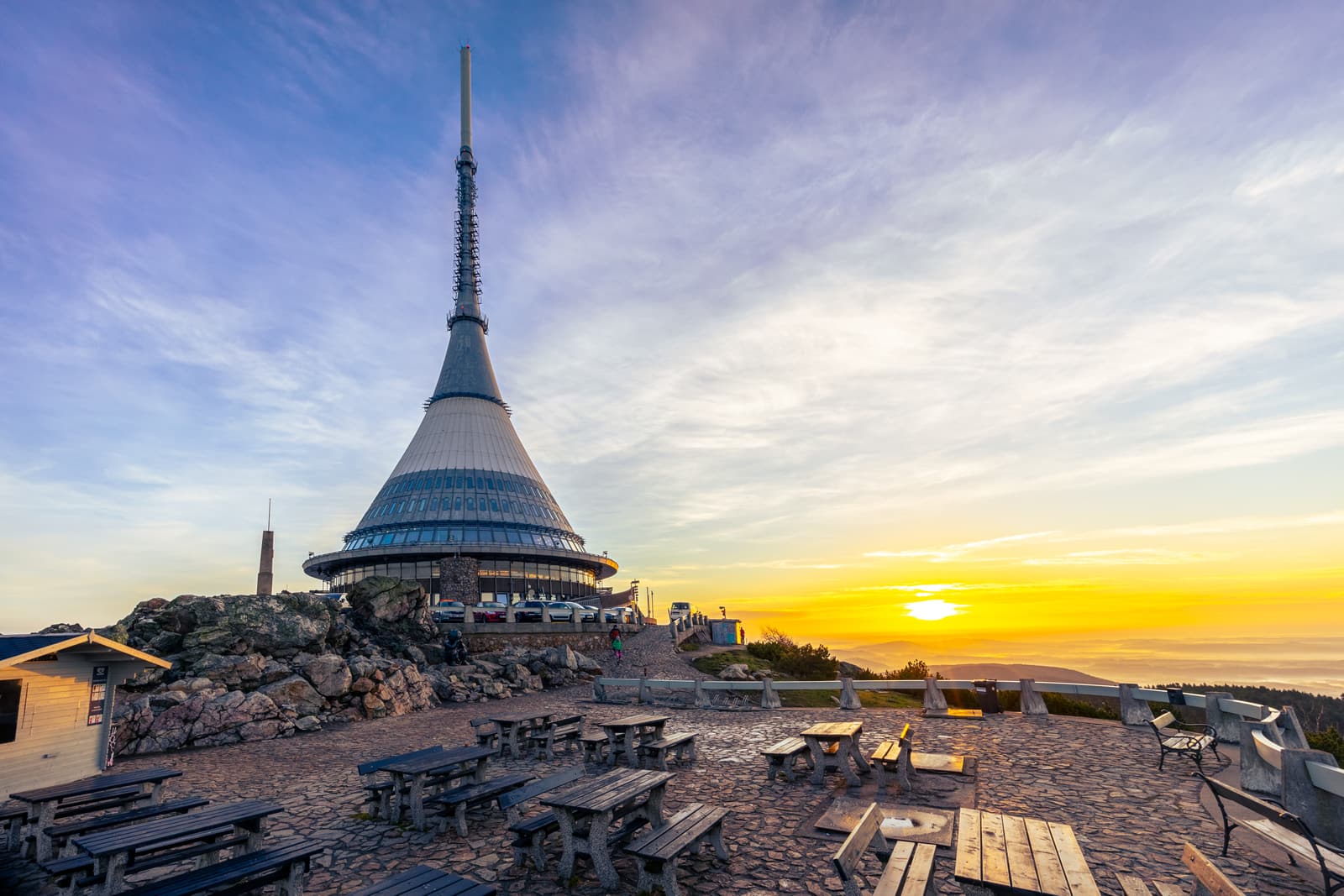
In August 1968 nine people were killed here during the Warsaw Pact invasion; a memorial on the town hall recalls them. The same decade produced the city’s modern emblem, the Ještěd tower, designed by a group of local architects around Karel Hubáček. Since 1989 Liberec has reinvented itself as a university and technology city and as a sports base — it hosted the Nordic World Ski Championships in 2009.
The main sights compared
Times are a realistic allowance for the visit itself, not including travel.
| Sight | Time needed | Best for | Weather |
|---|---|---|---|
| Ještěd | 2–4 h | Views, architecture | Clear days only |
| Town hall & old town | 2 h | History, architecture | Any |
| Zoo | 2–3 h | Families | Dry |
| Botanical garden | 1–1½ h | Plants, rainy days | Any (indoor) |
| iQLANDIA | 3–5 h | Families, science fans | Any (indoor) |
| Centrum Babylon | half a day | Children, swimming | Any (indoor) |
| North Bohemian Museum | 1½–2 h | Glass, design, history | Any (indoor) |
| Jizera Mountains / Bedřichov | a full day | Walking, cycling, skiing | Dry or snowy |
| Bohemian Paradise | a full day | Hiking, castles | Dry |
| Sychrov or Frýdlant | half a day each | Castle interiors | Any |
| Zittau & Oybin | a full day | Steam train, old towns | Any |
 In the city
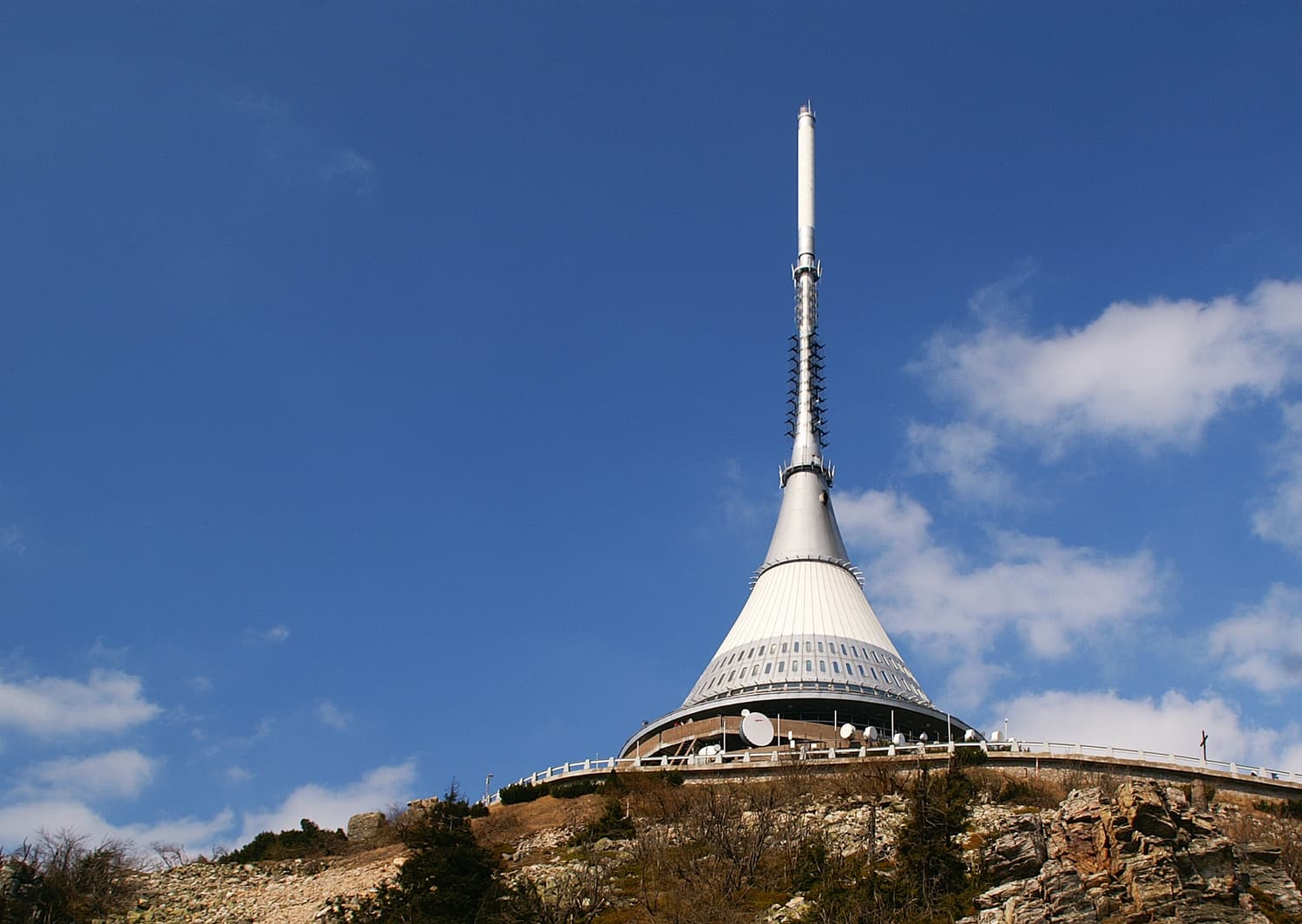
Ještěd Tower & Cable Car
The mountain-top hotel and transmitter that became the symbol of the city
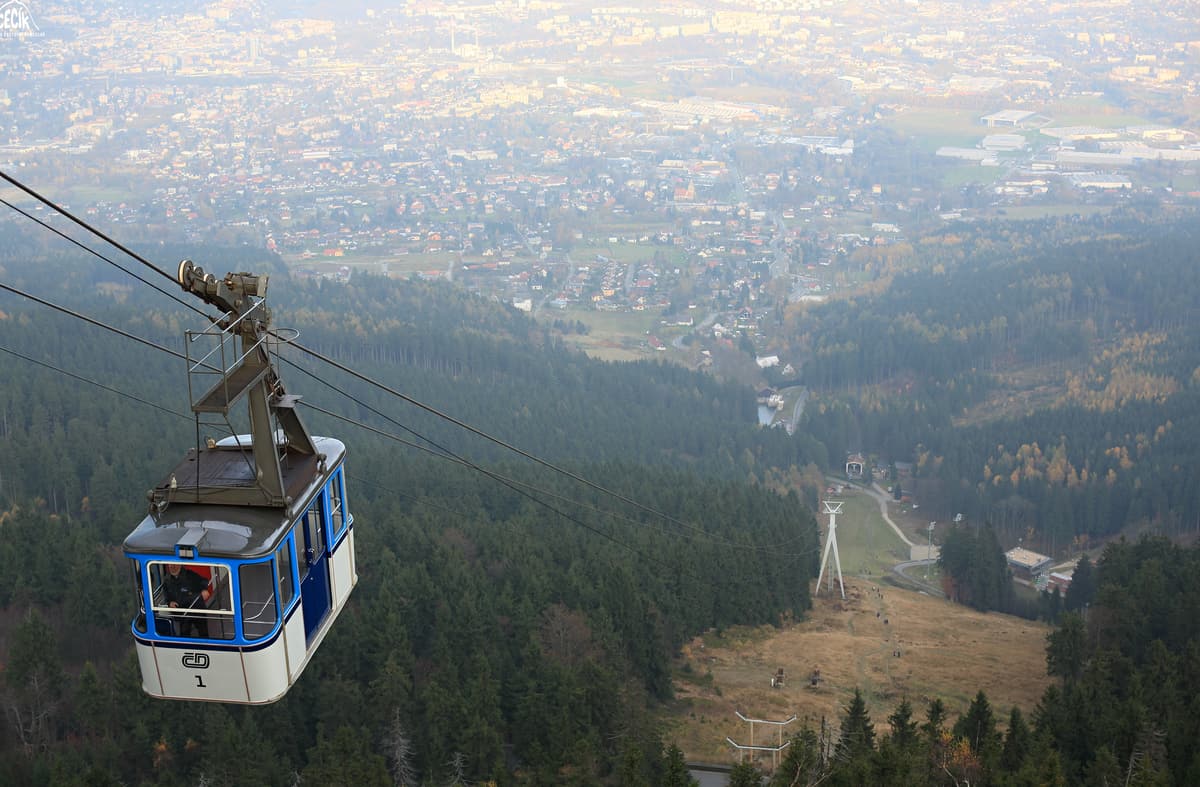
A 1,012 m summit crowned by Karel Hubáček’s silver hyperboloid — a hotel, restaurant and television transmitter in one building, and a national cultural monument. The historic cable car has been out of service since an accident in 2021, so check how to get up before you go.
 In the city
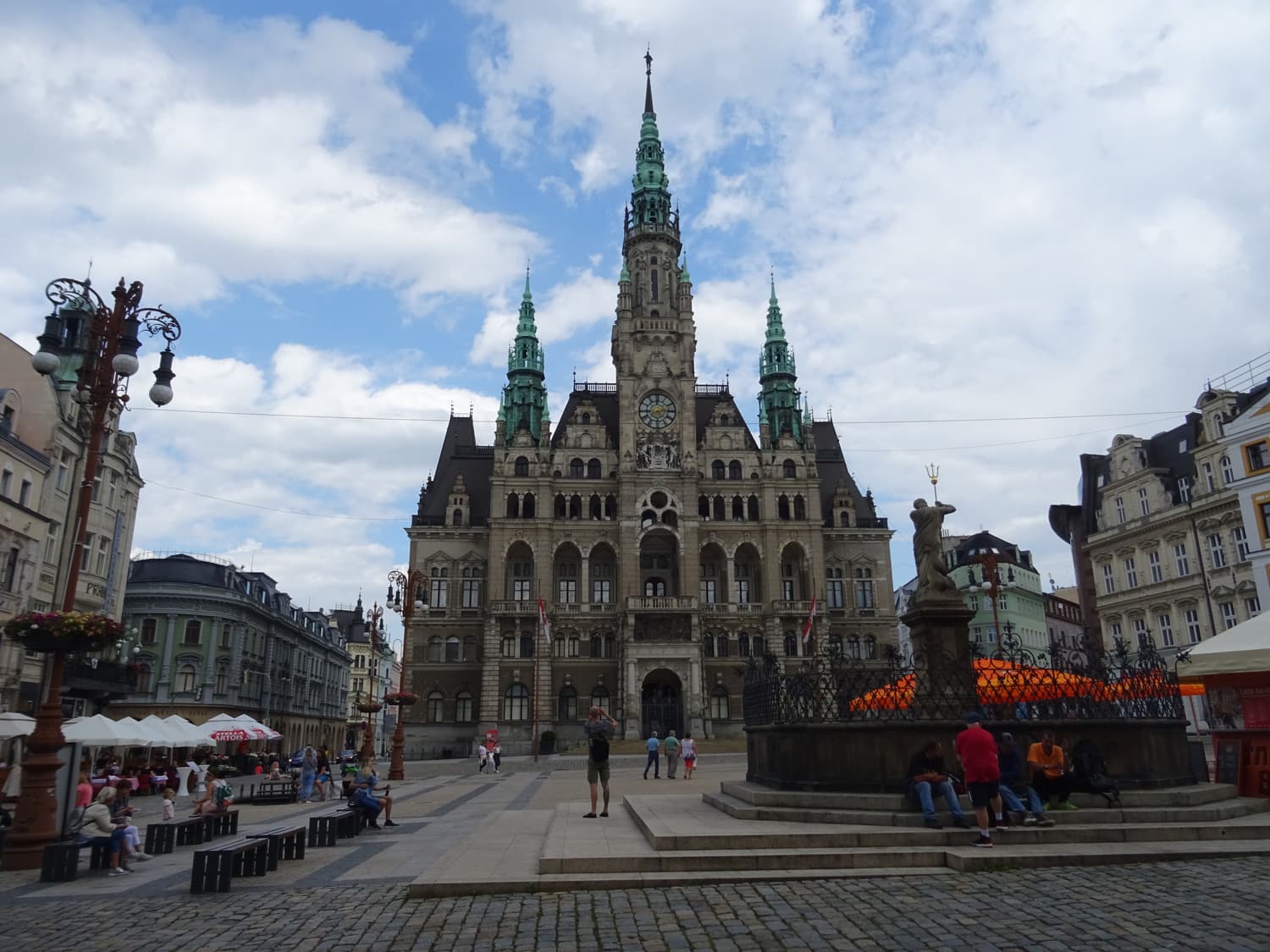
Liberec Town Hall & Old Town
A slice of Vienna on a North Bohemian square
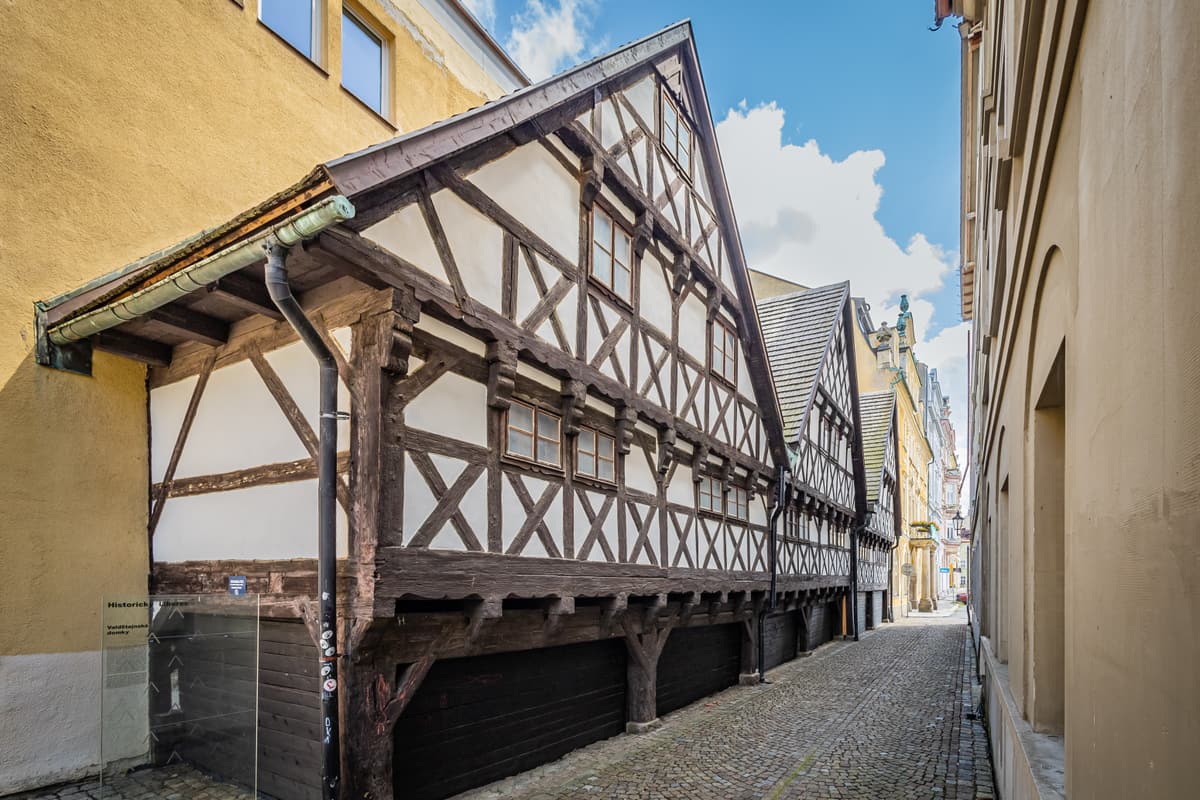
The neo-Renaissance town hall of 1888–1893, designed by the Viennese architect Franz Neumann, dominates Dr. E. Beneš Square with its 65 m tower. Around it lie the F. X. Šalda Theatre, the half-timbered Wallenstein Houses and the lanes of the old cloth-makers’ town.
 In the city
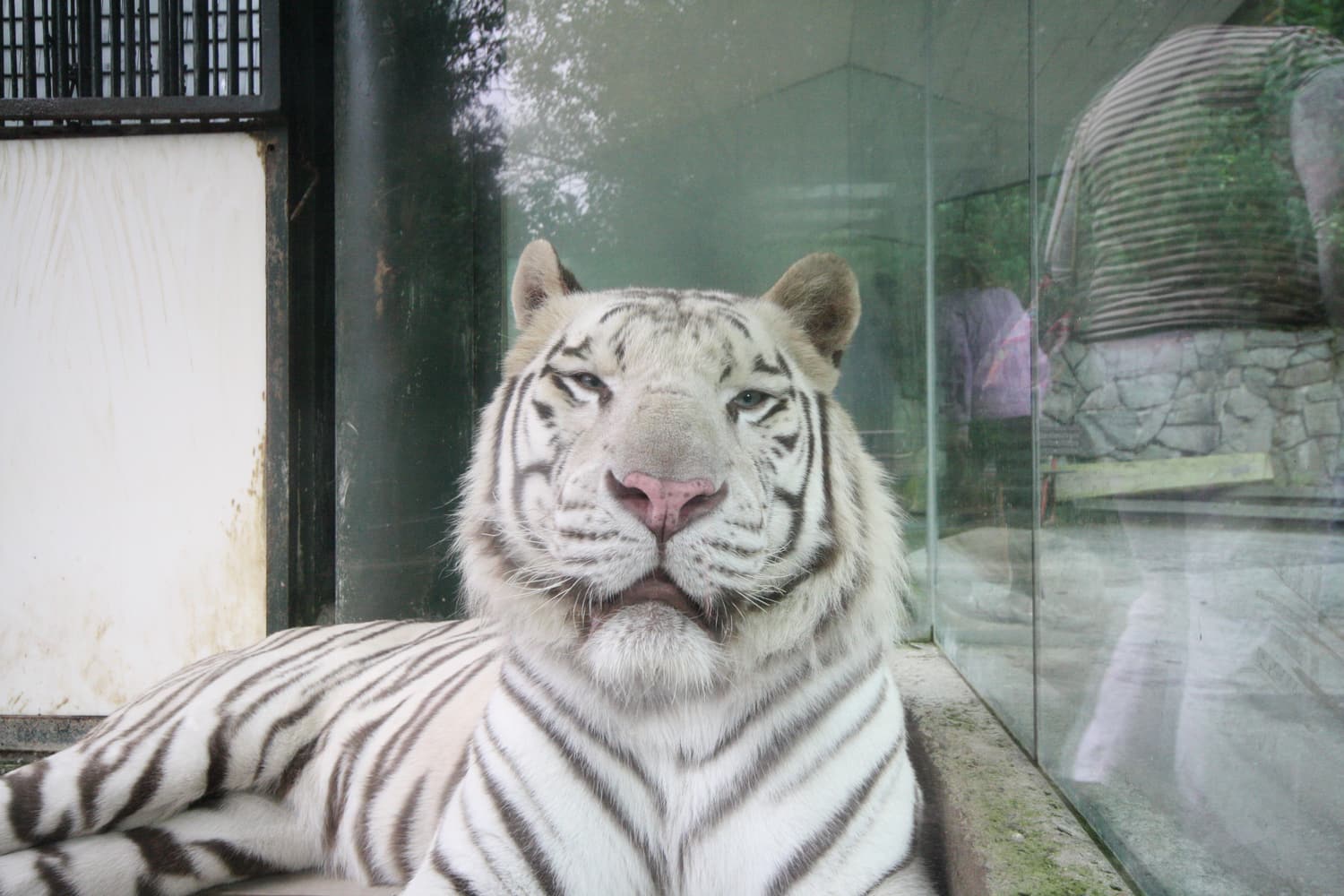
Liberec Zoo
The oldest zoo in the Czech Republic — and the home of the white tigers
A compact, leafy zoo in the Lidové sady park district that traces its beginnings to the early 20th century. It is best known for its white tigers and for long-standing breeding programmes with birds of prey and mountain animals.
 In the city
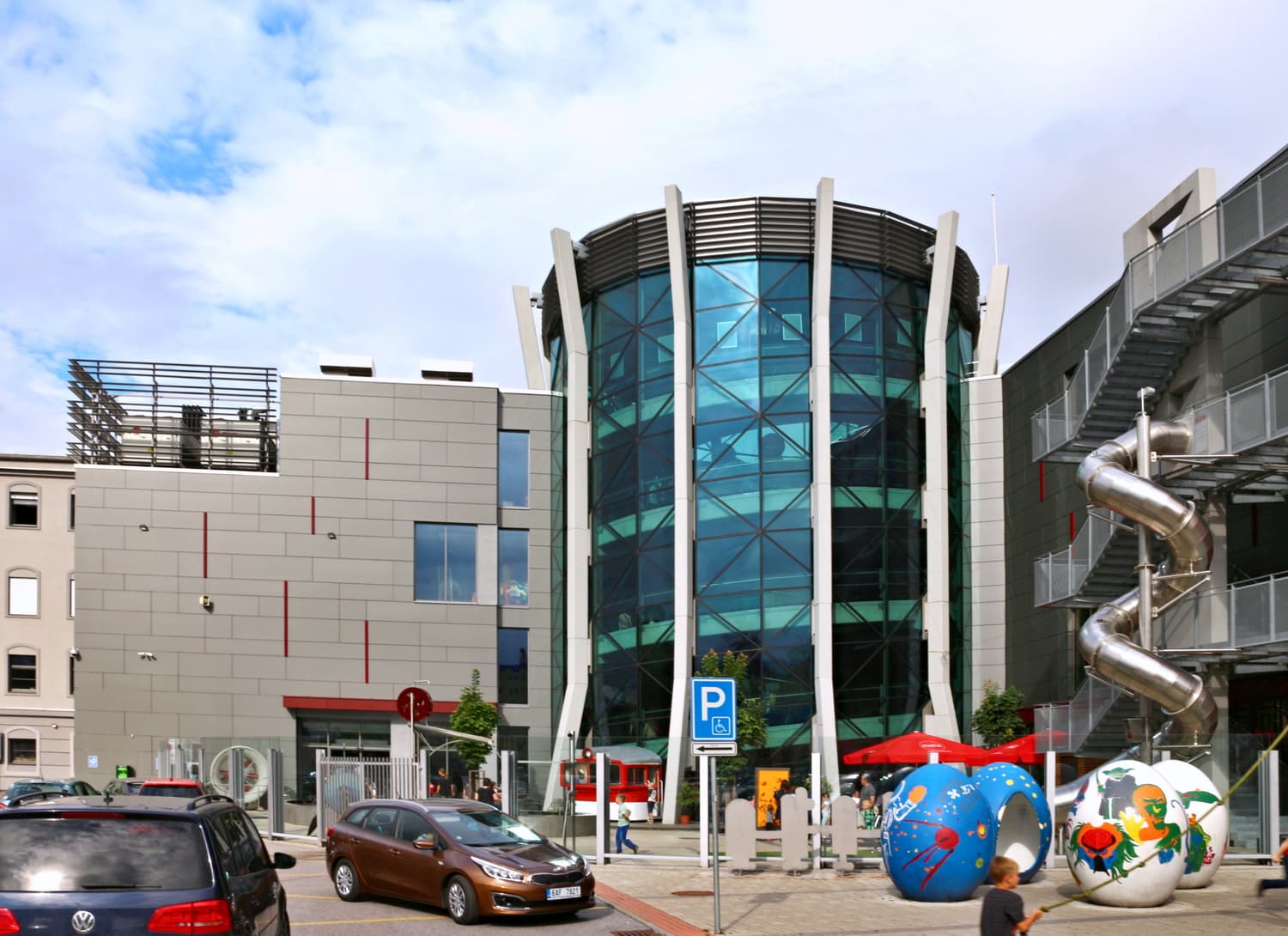
iQLANDIA Science Centre
Hands-on science, a planetarium and a talking robot
A modern science centre opened in 2014, with several floors of interactive exhibits on the human body, the elements, geology and technology, plus a planetarium and science shows. Its older sibling for small children, iQPARK, is next door in the Babylon centre.
The Ještěd cable car: what to know
The summit is still easy to reach — on foot from the tram terminus, by road to the car parks below the top, or by the seasonal bus that has run from the city since the closure. Our Ještěd page has the details.
Money and costs
The Czech Republic uses the koruna. Some hotels and shops near the border quote euros, usually at a poor rate; pay by card or in crowns. Liberec is noticeably cheaper than Prague. As rough guidance at the time of writing, a weekday lunch menu costs around CZK 160–230, a half-litre of beer around CZK 45–65 and a coffee around CZK 55–80; adult entry to the main attractions ranges from roughly CZK 150 to CZK 400. Prices rise every year — check current rates.
Tipping is modest: round up, or add about ten per cent for good table service.
Food and beer
Expect hearty Czech cooking: svíčková (beef in cream sauce with dumplings), goulash, roast pork with cabbage and dumplings, fried cheese. The mountains add their own dishes — kyselo, a sour soup of mushrooms and potato, and potato pancakes known locally as sejkory — and in summer the huts serve dumplings and pancakes with bilberries picked on the plateau.
The local beers are worth seeking out: Svijany, brewed near Sychrov since the 16th century, and Konrad from the Vratislavice district of Liberec. Vratislavice is also the birthplace of the car designer Ferdinand Porsche, born there in 1875.
Safety and health
- Liberec is a safe city; take the usual care with valuables at the stations and on night trams.
- The Jizera Mountains are gentle but high and exposed: the plateau is markedly colder and windier than the city, and fog comes down fast. Carry a layer and a map.
- Stay on the boardwalks in the peat bogs — they protect both you and a fragile habitat.
- Ticks are active from spring to autumn in forests and long grass. Use repellent and check yourself after a walk; ask your doctor about vaccination against tick-borne encephalitis if you hike a lot in Central Europe.
- Tap water is safe to drink.
- Carry a passport or ID card if your walk, ride or train crosses into Germany or Poland.
What to pack
- A waterproof: Liberec is one of the rainier Czech cities, in every season.
- Comfortable shoes — the centre is cobbled and hilly; walking shoes for the mountains and the rocks.
- A windproof layer for Ještěd, where it can be 6–8 °C colder than in town.
- In winter: warm boots, gloves and a hat. Cross-country skis can be hired in Bedřichov and in the city.
- Swimwear for Babylon and, in summer, for the reservoirs.
With children
Few Czech cities are better. iQLANDIA and iQPARK can fill a whole day, Babylon another, and the zoo a morning. In the Jizera Mountains the forest roads are smooth enough for pushchairs and children’s bikes. In the Bohemian Paradise, the rock labyrinths are a natural playground — but hold small hands at the viewpoints.
Accessibility
Modern low-floor trams run on the main line, though not on every departure. iQLANDIA, Babylon, the botanical garden and the museums are largely step-free; the old town is cobbled and steep in places. The summit of Ještěd has a paved terrace around the tower, but check access arrangements while the cable car is out of service.
Suggested itineraries
You will find one-day, three-day and week-long plans on our things to see page, and guided options on the best tours page.
Combine Liberec with the High Tatras
Liberec and Štrbské Pleso share a sporting history: Liberec hosted the Nordic World Ski Championships in 2009, the Slovak lake resort in 1970, and both still have their ski jumps. If you are planning a longer Czech–Slovak trip, the High Tatras make a natural mountain finale. The simplest route is via Prague, from where direct day and overnight trains run through Olomouc and Žilina to Štrba and Poprad; by car it is a full day’s drive of well over 500 km. Our Štrbské Pleso travel guide covers the lake, the hiking trails and the Tatra railways.